
Personal Care
Personal care at home, bathing, dressing, transfers
Hands-on help with the parts of the day that have got physically hard: getting washed, getting dressed, getting out of a chair and along the hall without anybody holding their breath. Praise Homecare Inc is a licensed non-medical home care agency in Wilson, North Carolina, and personal care is what most families are calling (877) 652-2907 about when they call for the first time.
How it usually starts
It usually starts with a bathroom
Almost nobody calls us about personal care in general. They call because of one room. He can still make his own coffee and follow the ball game, but getting in and out of the tub has become the frightening part of the day, and last Tuesday he waited two hours on the edge of the bed because he did not want to ask.
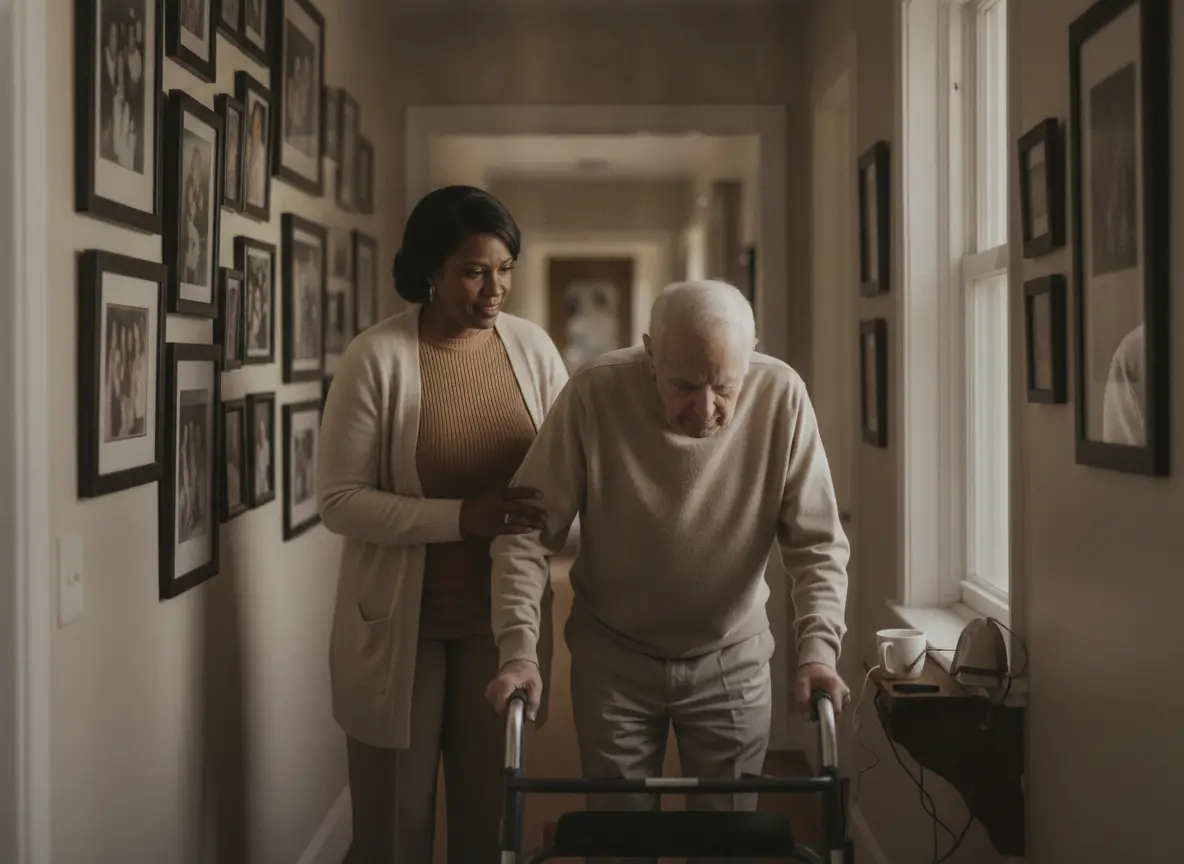
Personal care is hands-on help with that: bathing, dressing, grooming, moving between the bed, the chair and the bathroom. Done well it is quiet and quick and gives him the morning back. Done by a daughter who has to lift her father, it costs both of them something neither of them wanted to spend.
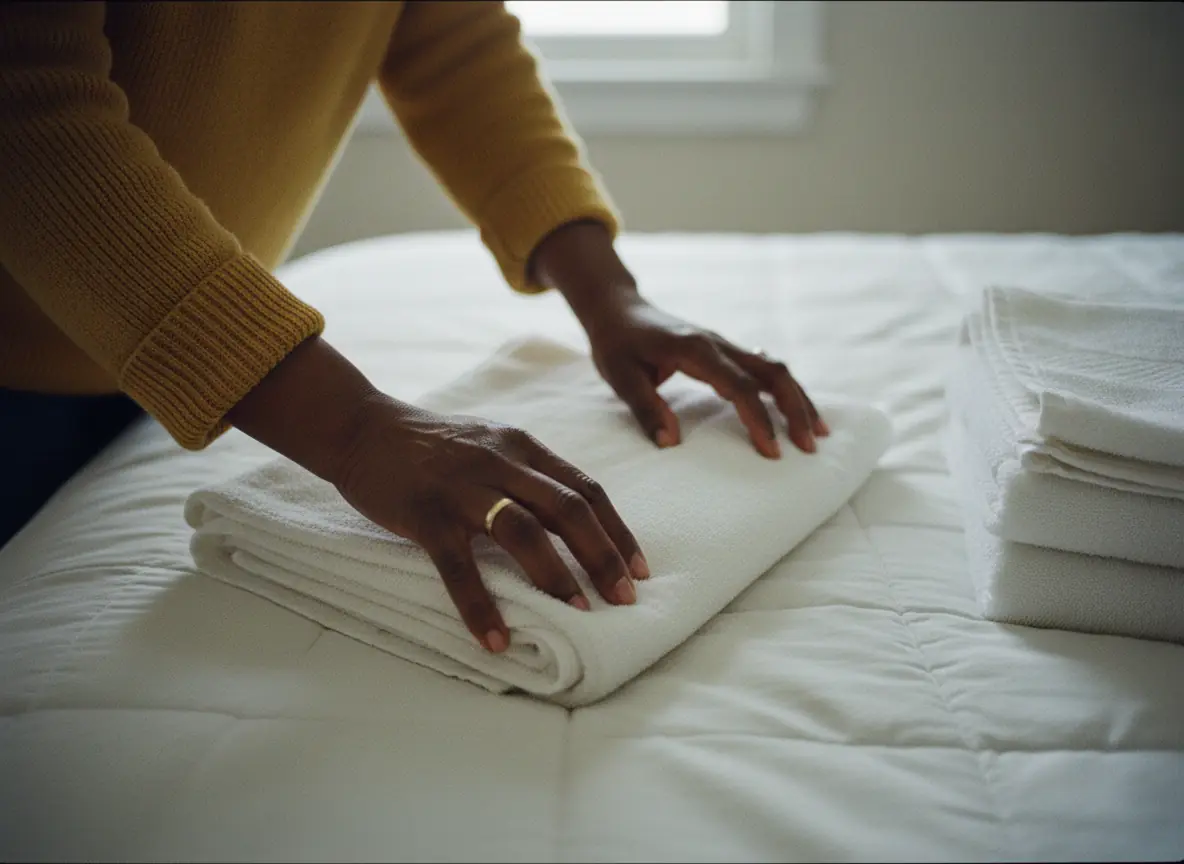
Around it goes the ordinary running of a day: meals cooked, laundry done, the kitchen kept passable, medication reminders, a ride to the appointment on Thursday. The everyday things are not the reason you called. They are the reason the arrangement holds.
Call to settled routine
Two weeks, start to finish
Most families want one thing answered before anything else: how long until somebody is actually in the house. Here is the whole sequence, including the parts North Carolina requires of us.
-
Day one
You call, and a person answers
The line is answered at any hour, including nights, weekends and holidays. The first conversation is short. What has changed, who is in the house, and how soon you need somebody.
-
Within days
An assessment at the kitchen table
Free, carried out in the home, with no cost and no obligation attached to it. North Carolina requires a registered nurse to assess the home before in-home aide services begin, so this visit is not a sales call with a clipboard. It is the step the state builds the plan on.
-
Before day one
A plan, signed before anybody starts
The plan of care is signed by the practitioner and by the client before services start. It names the tasks, the hours and the order of the day. You get a copy. If something in it is wrong, it is easier to fix now than in week three.
-
24 to 72 hours
A caregiver is matched
Usually within 24 to 72 hours of the assessment. Matching is on the practical things first, the lifting and the hours, and then on the human ones: whether he will talk to her, whether she can cook the food he actually eats.
-
First shift
The first morning is the slow one
Expect the first shift to take longer than the ones after it. Electronic visit verification clocks the caregiver in and out of every visit, so from that first morning onward there is a record of who was in the house and when, and you can ask for it.
-
Week two
Nearly every plan gets rewritten
By the second week you know things you could not have known at the table: that the shower goes better in the afternoon, that Monday is worse than Friday, that two hours was optimistic. Care plans are reviewed as needs change, and this is the first of those reviews.
Scope, stated once
Where the line falls, and who drew it
Personal care is non-medical work, and the boundary is not our house rule. North Carolina sets it, and a family is entitled to know exactly where it sits before anybody starts.
An in-home aide may
- Bathe, shower and help with grooming
- Dress and undress, including the fiddly parts
- Help with toileting and continence
- Transfer him and steady him moving around the house
- Help with eating
- Prompt medication at the right hour, reminders only, not administration
- Cook, wash, keep the place liveable, and drive to appointments and errands
An in-home aide may not
- Give or administer medication. North Carolina permits an aide to assist with self-administration and nothing further, which is why the wording on this site never softens
- Do anything the state classes as a skilled service. Those sit outside an in-home aide license by definition, and outside ours
- Make judgments about his health. Those stay with him and with the licensed professionals already involved, and we help the family keep them in the picture
Our license is HC7440, issued by the North Carolina Division of Health Service Regulation, and the scope on it reads in-home aide plus companion, sitter and respite. That is a public file. You are welcome to check it.
How much, and when
Ten hours a week, or forty, or all of them
Most families here land somewhere between 10 and 40 hours a week. A morning visit to get him up, washed and fed, and an evening one to get him back to bed, is the commonest shape there is. From there it goes in both directions: an hour a day, or overnight cover, or around the clock, or a short block over a holiday while the family is away.
Nights, weekends and holidays are covered, and the phone is answered on all of them. Hours are not a commitment you make once. They move as he does, in either direction, and a review does not cost anything.
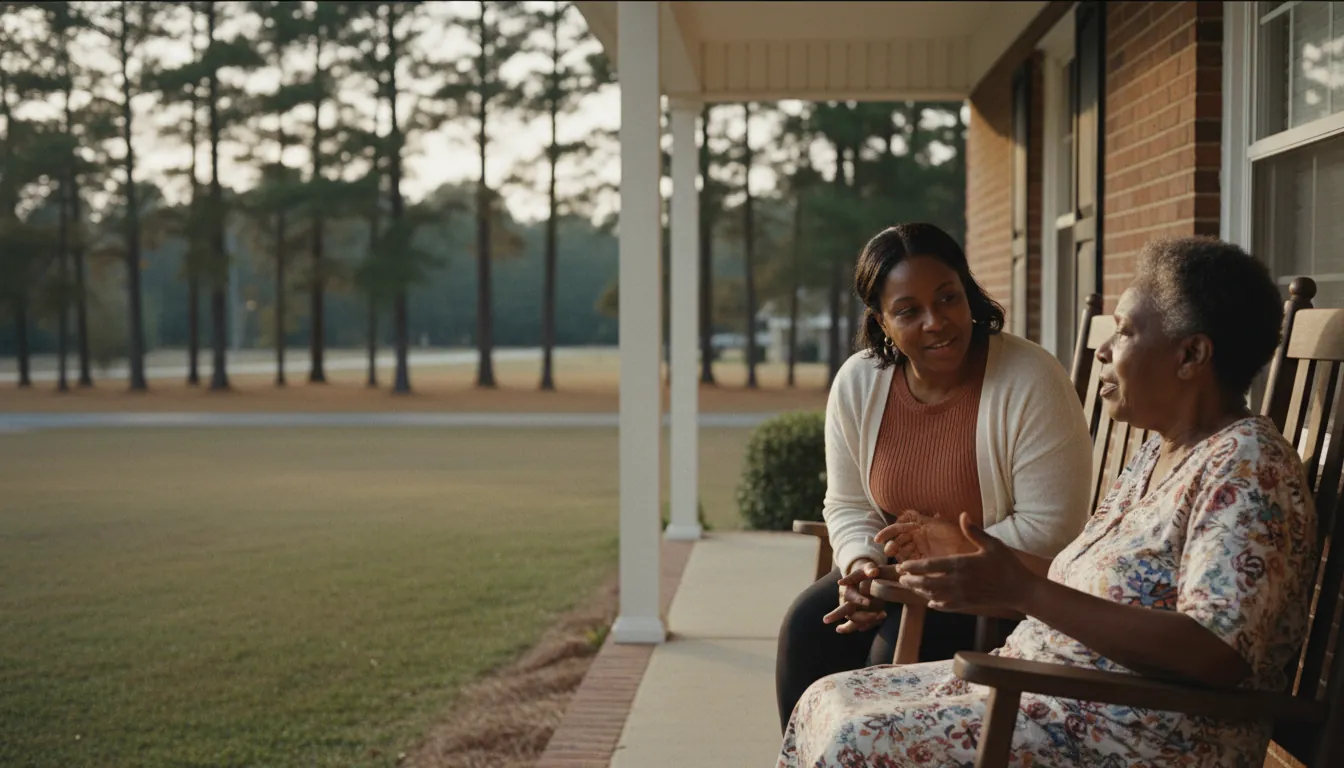
Personal care runs everywhere we go. Wilson is home and the rest follow from it.
Before you book
Four questions families ask first
- Will it be the same caregiver every time?
- That is the aim, and it is the whole reason for matching rather than sending whoever is free. When your regular caregiver cannot make a shift we arrange a backup caregiver rather than leaving the visit uncovered.
- My father will not let a stranger wash him. What then?
- Then we do not start there. Early shifts can be meals, laundry, a lift to an appointment, and the personal care comes later once he has decided for himself that she is all right. Pushing that step costs months.
- Can we start small and add hours later?
- Yes, and most people do. Two or three visits a week is a normal start. The plan is reviewed as needs change, so adding a morning or dropping one is a phone call, not a renegotiation.
- Is this the same thing as home health?
- No, and the difference is a certification line rather than a task line. A home health agency is a home care agency that has additionally been certified by Medicare for skilled services. We hold a North Carolina home care license, HC7440, covering in-home aide and companion, sitter and respite, which is exactly what this page describes and nothing beyond it.
Starting
Tell us which part of the day is hardest
Mornings, evenings, the bathroom, the stairs. Whichever one it is, that is where a first plan starts, and you can describe it in about twenty minutes. The assessment is free, nothing is signed on the day, and you will get a straight answer about whether a couple of visits a week would fix this or whether it needs more than that. Call (877) 652-2907 at any hour, or leave a number here and we will call you.